

Skip to content
Open problems

Open problems

This page sets out the questions the lab treats as open across its four programmes: representation and memory, where knowledge lives, worlds and action, and models of people.

Each entry states a question that evidence could answer, what the cited work has shown and why it does not yet settle the question, what result would settle it, and the lab inquiry that addresses it, where one does. Problems without an inquiry mark where the programmes go next.

Every claim about other work cites a published source. Each entry ends with the contribution that would move it, and pointers to work that already settles a problem are welcome.

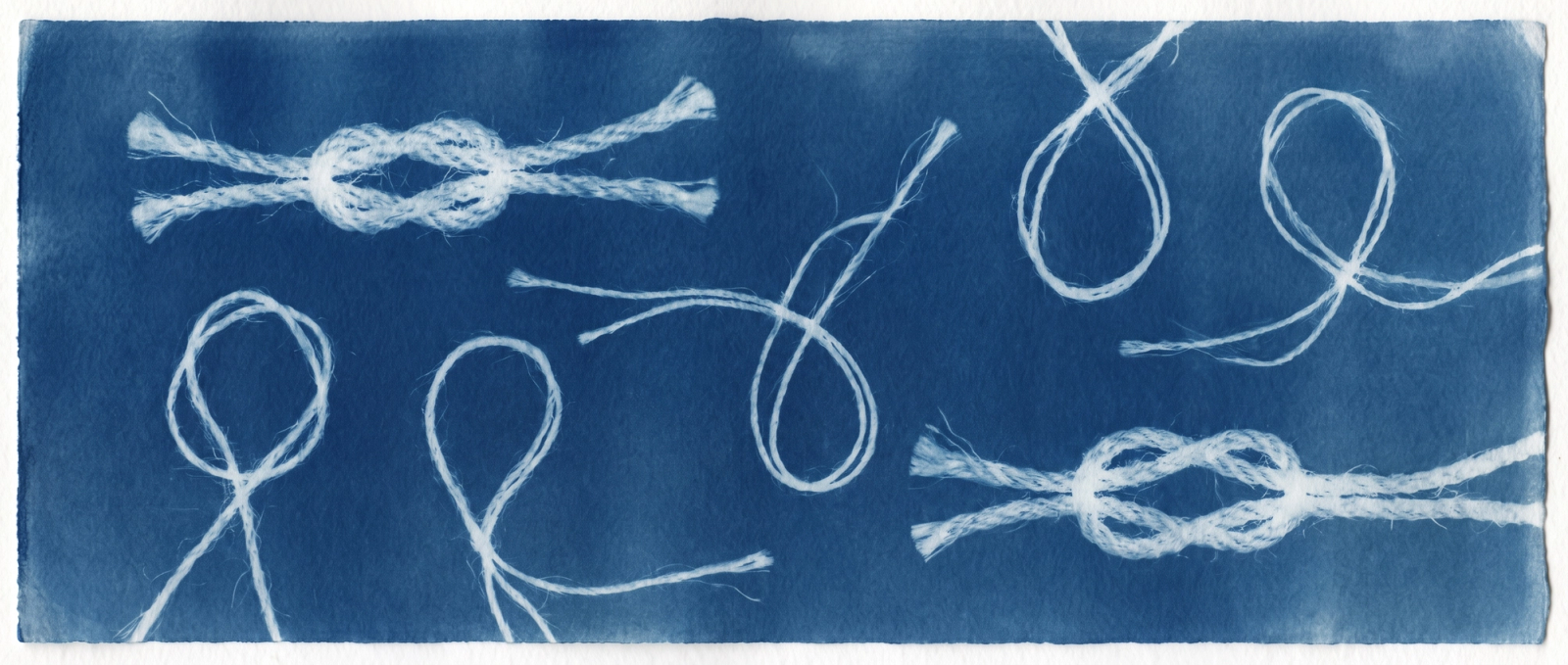
Generated cyanotype print of lengths of rope on deep blue: two tied into finished knots, five left as open loops with free ends.Generated photograph of a white plaster relief landscape cut through by five round openings, each with a small vermilion pin at its rim.Generated render of a measured sea floor in glowing points, broken by dark irregular gaps where no soundings exist, with a pale aqua point on the rim of the largest.
Plate ITwo knots are tied. The rest are still open.Where the model stops, a pin marks the edge of what is known.The dark is not empty. It has not been measured.Generated image in a cyanotype treatment. Far Akin art direction.Generated image. Far Akin art direction, Datum look.Generated image. Far Akin art direction, Swath look.

Representation and memory

Do proposed measures of an internal workspace in language models give repeatable readings, and do different measures rank models alike?

Why it is open

A recent study reports that the representations a language model is poised to verbalise behave like a global workspace: their contents can be reported, held and used in silent reasoning, and they carry coherent content only in an intermediate band of layers[23]. Measurement in interpretability has known traps. A probe can learn the task itself rather than reflect the representation, which control tasks are built to expose[24]. A subspace intervention can change behaviour through a dormant parallel pathway, giving an illusory attribution[25]. Before such measures are used to compare models, or to train a model to have a workspace, their repeatability and their agreement with one another need to be shown.

What would settle it
Test-retest correlations for each measure across seeds and prompt sets on several open-weight models, and a multitrait-multimethod comparison showing whether the measures converge or diverge.
What would move it
An independent implementation of one workspace measure, or of a rotation control, run on the same open-weight models.

When one fact in a model's weights is edited, how does correct updating of the facts that depend on it change as the number of dependents grows?

Why it is open

Editing methods are usually judged on whether the edited fact is recalled and unrelated facts are left alone. Benchmarks that test the consequences of an edit find that methods which recall the edited fact fail badly on multi-hop questions whose answers should change[26], and fail to make consistent changes across related facts, where a simple in-context baseline scores best[27]. Where causal tracing localises a fact does not indicate which layer is best to edit[28]. A system that corrects facts over time needs to know how propagation and collateral damage change as the number of dependent facts grows, which an average over edits does not show.

What would settle it
Propagation and collateral-error rates for weight-based editing methods at fixed update budgets, plotted against the number of dependents per edited fact on a public record of superseded facts.
What would move it
A public, licensed record of superseded facts with a machine-readable map of which facts depend on which.

Can a model forecast, before new learning happens, which of its stored items that learning will disrupt?

Why it is open

Networks trained on tasks in sequence can lose earlier learning abruptly[29]. In continual learning, examples learned quickly are less prone to forgetting, and choosing replay examples by learning speed reduces forgetting[30]. Separately, language models can be trained to predict whether they know the answer to a question, though that prediction is poorly calibrated on new tasks[31]. These lines leave a narrower question open: whether a model can predict, from a description of a coming disruption, which of its memories will fail, and whether a fixed protection budget spent on that forecast does better than one spent on simpler signals.

What would settle it
A pre-registered comparison of a trained failure forecaster against a matched untrained forecaster and ablations that remove the memory or the training on outcomes, scored with a proper scoring rule on held-out disruptions.
What would move it
A critique of the forecasting design from a researcher who works on calibration and proper scoring rules.

Which structure beyond plain retrieval, such as typed records, time validity, supersession or explicit relations, improves an agent's long-term memory enough to justify its cost?

Why it is open

Long-term conversational memory remains hard. On LoCoMo, long-context models and retrieval improve results but still lag substantially behind human performance[32]; on LongMemEval, commercial assistants and long-context models show a 30% accuracy drop across sustained interactions[33]. Systems add structure in different ways: tiers of memory managed like an operating system, as in MemGPT[34], or a temporally aware knowledge graph, as in Zep[35]. Their evaluations overlap only on one benchmark, Deep Memory Retrieval, on which Zep was compared directly with MemGPT, and each reports evaluations the other did not run[34]⁠[35]. The open question is which layer of structure earns its cost on which failure mode, such as knowledge updates or temporal reasoning, when all are compared under one protocol with cost reported.

What would settle it
An ablation ladder from full context and raw retrieval up to richer structured layers, run on shared public memory benchmarks with cost reported, showing which added layer wins on which failure mode.
What would move it
Independent runs of the ablation ladder on public memory benchmarks, or a critique of the rule for when a richer layer counts as having earned its cost.

Where knowledge lives

For a domain with a curated ontology, does training the ontology into a small model's weights do better than keeping it outside the model as retrieval and validators?

Why it is open

Ontology-driven self-training improved a model on hypernym discovery and medical question answering, and preserved more of its original knowledge than TaxoLLaMA, a direct ontology-injection method[36]⁠[37]. Against that, models struggle to learn new facts through unsupervised fine-tuning, and retrieval outperformed fine-tuning on knowledge-intensive tasks[38]. Grammar-constrained decoding lets an untrained model meet a required output structure, and on some structured tasks it beats task-specific fine-tuned models[39]. These results use different domains, tasks and baselines, so they do not settle when structure belongs in a model's weights and when it belongs beside the model.

What would settle it
Head-to-head comparisons in at least two domains of a small model trained on ontology-derived data against the same model with structured retrieval, with validators, and with both, at matched cost.
What would move it
A public domain ontology under a licence that allows derived training data, with held-out tasks labelled by domain experts.

Does a small specialist model improve a frontier model's results on a narrow domain task beyond what structured retrieval already provides?

Why it is open

Small models trained on carefully selected and synthetic data can do well on narrow tasks: a 1.3-billion-parameter code model trained largely on textbook-quality data reached 50.6% pass@1 on HumanEval[40]. A position paper argues that small models suit many calls inside agentic systems, which are specialised and repetitive, and cost less to run[41]. Neither shows that a specialist improves a system that already pairs a frontier model with good retrieval. The comparison that matters to a builder is frontier model alone, frontier model with structured retrieval, specialist alone, and frontier model with specialist, on the same held-out tasks.

What would settle it
A comparison, on held-out tasks in a narrow domain with source items frozen before any paraphrase, of at least four arms: frontier model alone, frontier with structured retrieval, specialist alone and frontier with specialist, showing whether the frontier-plus-specialist arm beats the frontier model with structured retrieval by more than its added cost. The linked inquiry runs these as four of its seven arms.
What would move it
Held-out, expert-labelled task sets in a narrow technical domain, written by someone outside the lab.

For which kinds of domain question does retrieval over a graph outperform plain text retrieval, and does a graph built from a curated ontology change the answer?

Why it is open

Graph-based retrieval was proposed for global questions about a whole corpus, which plain retrieval handles poorly because they are a summarisation task rather than a lookup[42]. A systematic comparison under one protocol found distinct strengths for each approach across tasks and evaluation perspectives, and gains from combining them[43]. That comparison used widely used text benchmarks. In domains with a governed vocabulary and explicit relations, a graph can be built from the ontology instead of being extracted by a model, and whether the same boundary between the two approaches holds there is a separate question.

What would settle it
A matched comparison of text retrieval, model-extracted graph retrieval and ontology-derived graph retrieval on a labelled set of domain questions sorted by type, with cost reported.
What would move it
A domain corpus with an ontology and a set of questions labelled by type, released under a licence that allows evaluation.
Inquiry
Open for a first inquiry.

Worlds and action

Does a learned world model keep the state of a place it has generated consistent when an agent leaves and returns many steps later?

Why it is open

Interactive world models can now generate action-controllable environments learned from unlabelled video alone[1]. A limited temporal context, however, often breaks long-term consistency: a scene revisited after a long gap no longer matches what was generated before[2]. One recent approach, WorldMem, adds an explicit memory of past frames and states, retrieved by pose and timestamp, and reports accurate reconstruction of previously observed scenes even after large viewpoint or time gaps[2]. WorldMem also shows, in qualitative figures, objects the agent placed still present on return; its quantitative results use image reconstruction metrics, and changes such as plant growth are shown only qualitatively[2]. The cited work does not include a benchmark with a ground-truth record of persistent state that scores state errors on return as a function of gap length.

What would settle it
A benchmark of action sequences with a ground-truth record of persistent state, on which models with and without explicit memory are scored for state errors on return, reported as a curve over the length of the gap.
What would move it
Queryable access to an action-conditioned world model that keeps state, so its rollouts can be checked against a written record of what should persist.

Do the fidelity scores used to rank world models predict whether a model's dynamics respond correctly to actions?

Why it is open

World models are mostly compared on how realistic their output looks. In the few models studied so far, visual realism has not tracked physical understanding or action-following[3]⁠[4]. Video models that predict in a learned representation space show an understanding of object permanence and shape consistency under a violation-of-expectation test, while pixel-space prediction stays closer to chance[5]; that test was adapted from developmental psychology for machine learning in earlier work[6]. These studies cover few models, so they do not establish the general relation between realism and correct dynamics across model families.

What would settle it
Rank correlations, across a broad set of world models, between standard fidelity metrics and action-following or physical-consistency scores on shared test cases. A correlation near zero or negative across model families would settle that fidelity cannot stand in for dynamics.
What would move it
A second, independently written test world, or a set of held-out physical test cases, scored against several open world models.

When a learned world model is used to evaluate robot policies, under what conditions do its success verdicts rank policies in the same order as real-world trials?

Why it is open

Real-robot testing is costly, so action-conditioned video models are being used as stand-in environments. One such system reports that policy success rates inside the world model correlate highly with real-world success rates and preserve rankings across policy versions, sizes and checkpoints[7]. A separate line of work argues that a world model used as a test oracle is itself an unverified learned artefact, and proposes a ladder of admissibility checks drawn from safety-critical simulation practice that a model must pass before its verdicts count as evidence[4]. Neither cited study maps where agreement breaks: which tasks, which kinds of policy failure and which distances from the training data make a verdict untrustworthy.

What would settle it
Paired evaluations of many policies inside a world model and in real or trusted-simulator trials, broken down by task type and by distance from the world model's training data, showing where rank agreement holds and where it fails.
What would move it
Paired real-world or high-fidelity simulator results for a set of public policies, released with the conditions of each trial.
Inquiry
Open for a first inquiry.

Do the variables a probe can decode from a robot policy's internal state coincide with the variables the policy actively holds steady under disturbance?

Why it is open

Probing shows what a representation encodes, but probe accuracy need not track what a model uses; removing a property from the representation and measuring the effect on behaviour is a stronger test[8]. In vision-language-action policies, sparse directions in activation space, such as speed and direction, have been found to be causally linked to action selection[9], and open models such as OpenVLA make this kind of work possible[10]. Evaluation still rests largely on end-task success, which hides weaknesses in spatial reasoning and dynamic adaptation[11]. Neither probing nor success rates asks directly which scene variables a policy keeps steady when they are pushed, or whether that predicts where it fails.

What would settle it
Disturbance sweeps on frozen open policies showing whether resistance along specific scene directions exceeds what probe decodability predicts, and whether that resistance forecasts survival on held-out disturbance conditions.
What would move it
An independent review, or a second implementation, of a disturbance harness for a public robot-simulation benchmark.

Models of people

When a language model reproduces published survey results, how much of the agreement comes from having seen those results in training?

Why it is open

Conditioning a language model on demographic backstories can reproduce the response distributions of many human subgroups, a property called algorithmic fidelity[12]. Agreement with published data is the usual evidence for it, but a model may have read the published data during training. Testing whether specific text was in training is unreliable: membership inference attacks barely beat random guessing in most settings across a suite of models[13], and on published evaluation sets blind baselines that never look at the model outperform them[14]. So agreement with published results cannot yet be taken to separate a model's estimate of a population from its recall of a published table.

What would settle it
A comparison of fidelity on survey instruments published before and after model training cut-offs, matched on construct and item type, with an exposure measure that is shown to beat a blind baseline.
What would move it
A dated, construct-matched list of survey instruments with published item-level results on both sides of current model cut-offs.

Can a simulated sample reproduce the variance and the relationships between variables found in human survey data, not only the averages?

Why it is open

Persona-prompted model answers can match the averages of a national election study while showing less variation than the real survey, with regression coefficients that often differ significantly from estimates on the human data; minor changes in prompt wording also shift the synthetic distribution[15]. Analysis and human studies across 16 demographic identities argue that current training leads models to misportray and flatten demographic groups[16]. Misalignment between model opinions and those of US demographic groups is substantial and persists after explicit steering towards a group[17]. Fidelity on averages is therefore a weak certificate for any analysis that depends on spread or on relationships between variables.

What would settle it
Pre-registered comparisons on public survey microdata of simulated and human variance, inter-item correlations and regression coefficients, across several models and prompting schemes, with the gap reported statistic by statistic.
What would move it
Public survey microdata with documented sampling, suitable for comparing spread and regression estimates between simulated and human samples.
Inquiry
Open for a first inquiry.

How far does a model conditioned on one person's interview or survey answers predict that person's answers to new questions, and for whom does it fail?

Why it is open

Agents built from interviews predicted participants' held-out General Social Survey answers at 83% of the participants' own test-retest consistency, better than agents given demographics only[18]. Earlier work replicated several classic experimental findings with simulated samples and also found a systematic distortion in some models[19]. Accuracy normalised by each person's own consistency is a strong standard. In that study it was measured on one national sample and a bounded set of outcomes; the study does not establish how it holds for behaviour far from the interview's content, over longer spans of time, or for people poorly represented in training text.

What would settle it
Replications of interview-grounded agents on independent samples and on outcomes far from the interview's content, scored against each person's own retest consistency and broken down by group.
What would move it
An independent sample with consented interviews and retest answers, collected under a protocol that allows direct comparison with the published results.
Inquiry
Open for a first inquiry.

When a simulated person is exposed to an intervention or to a sequence of adaptive questions, does the simulator keep that person's fixed attributes fixed?

Why it is open

Because language models learn mostly from observational text, an intervention given to a simulated user can shift that user's implied attributes, so the treatment and control arms no longer describe the same population[20]. Instructed chatbots drift from their system prompt within eight rounds of conversation[21]. Model responses to changes in survey wording often fail to match human response biases, and react to perturbations that leave humans unmoved[22]. Measuring negative-control attributes that should not change can reveal drift, and eliciting targeted confounders into the persona reduces the bias in some settings[20]. The cited work does not show whether any simulator design keeps fixed traits fixed across long, adaptive exchanges.

What would settle it
Multi-turn experiments that measure negative-control attributes before and after each turn across several simulator designs, showing which designs keep them stable and at what cost to responsiveness.
What would move it
A critique of the choice of negative-control attributes from survey-methodology practice, and an independent reimplementation of a persona-conditioned user simulator.

References

  1. Bruce, J., Dennis, M., Edwards, A., Parker-Holder, J., Shi, Y., Hughes, E., et al. (2024). Genie: Generative Interactive Environments. arXiv preprint 2402.15391.
  2. Xiao, Z., Lan, Y., Zhou, Y., Ouyang, W., Yang, S., Zeng, Y., et al. (2025). WorldMem: Long-term Consistent World Simulation with Memory. Advances in Neural Information Processing Systems 38 (NeurIPS 2025).
  3. Motamed, S., Culp, L., Swersky, K., Jaini, P., Geirhos, R. (2025). Do generative video models understand physical principles? arXiv preprint 2501.09038.
  4. Oefinger, C., Schäfer, F. R., Moller, K., Piccinini, M., Betz, J. (2026). Validate the Dream Before You Trust Its Verdict: Admissibility for World-Model Simulators. arXiv preprint 2607.07196.
  5. Garrido, Q., Ballas, N., Assran, M., Bardes, A., Najman, L., Rabbat, M., et al. (2025). Intuitive physics understanding emerges from self-supervised pretraining on natural videos. arXiv preprint 2502.11831.
  6. Piloto, L. S., Weinstein, A., Battaglia, P., Botvinick, M. (2022). Intuitive physics learning in a deep-learning model inspired by developmental psychology. Nature Human Behaviour 6(9), 1257–1267.
  7. Quevedo, J., Sharma, A. K., Sun, Y., Suryavanshi, V., Liang, P., Yang, S. (2025). WorldGym: World Model as An Environment for Policy Evaluation. arXiv preprint 2506.00613.
  8. Elazar, Y., Ravfogel, S., Jacovi, A., Goldberg, Y. (2021). Amnesic Probing: Behavioral Explanation with Amnesic Counterfactuals. Transactions of the Association for Computational Linguistics 9, 160–175.
  9. Häon, B., Stocking, K., Chuang, I., Tomlin, C. (2025). Mechanistic interpretability for steering vision-language-action models. Conference on Robot Learning (CoRL 2025).
  10. Kim, M. J., Pertsch, K., Karamcheti, S., Xiao, T., Balakrishna, A., Nair, S., et al. (2024). OpenVLA: An Open-Source Vision-Language-Action Model. arXiv preprint 2406.09246.
  11. Peng, J., Zhang, Y., Duan, Y., Liang, T., Chaudhary, V., Yin, Y. (2025). NEBULA: Do We Evaluate Vision-Language-Action Agents Correctly? arXiv preprint 2510.16263.
  12. Argyle, L. P., Busby, E. C., Fulda, N., Gubler, J. R., Rytting, C., Wingate, D. (2023). Out of One, Many: Using Language Models to Simulate Human Samples. Political Analysis 31(3), 337–351.
  13. Duan, M., Suri, A., Mireshghallah, N., Min, S., Shi, W., Zettlemoyer, L., et al. (2024). Do Membership Inference Attacks Work on Large Language Models? Conference on Language Modeling (COLM 2024).
  14. Das, D., Zhang, J., Tramèr, F. (2024). Blind Baselines Beat Membership Inference Attacks for Foundation Models. arXiv preprint 2406.16201.
  15. Bisbee, J., Clinton, J. D., Dorff, C., Kenkel, B., Larson, J. M. (2024). Synthetic Replacements for Human Survey Data? The Perils of Large Language Models. Political Analysis 32(4), 401–416.
  16. Wang, A., Morgenstern, J., Dickerson, J. P. (2025). Large language models that replace human participants can harmfully misportray and flatten identity groups. Nature Machine Intelligence 7(3), 400–411.
  17. Santurkar, S., Durmus, E., Ladhak, F., Lee, C., Liang, P., Hashimoto, T. (2023). Whose Opinions Do Language Models Reflect? arXiv preprint 2303.17548.
  18. Park, J. S., Zou, C. Q., Kamphorst, J., Egan, N., Shaw, A., Hill, B. M., et al. (2024). LLM Agents Grounded in Self-Reports Enable General-Purpose Simulation of Individuals. arXiv preprint 2411.10109. First released as 'Generative Agent Simulations of 1,000 People'; title as shown on the current arXiv version.
  19. Aher, G., Arriaga, R. I., Kalai, A. T. (2023). Using Large Language Models to Simulate Multiple Humans and Replicate Human Subject Studies. International Conference on Machine Learning (ICML 2023).
  20. Lin, V., Yun, T., Matarić, M., Canny, J., Gretton, A., D'Amour, A. (2026). The Illusion of Intervention: Your LLM-Simulated Experiment is an Observational Study. arXiv preprint 2605.20767.
  21. Li, K., Liu, T., Bashkansky, N., Bau, D., Viégas, F., Pfister, H., et al. (2024). Measuring and Controlling Instruction (In)Stability in Language Model Dialogs. Conference on Language Modeling (COLM 2024).
  22. Tjuatja, L., Chen, V., Wu, S. T., Talwalkar, A., Neubig, G. (2023). Do LLMs exhibit human-like response biases? A case study in survey design. arXiv preprint 2311.04076.
  23. Gurnee, W., Sofroniew, N., Pearce, A., Piotrowski, M., Kauvar, I., Chen, R., et al. (2026). Verbalizable Representations Form a Global Workspace in Language Models. arXiv preprint 2607.15495.
  24. Hewitt, J., Liang, P. (2019). Designing and Interpreting Probes with Control Tasks. Proceedings of EMNLP-IJCNLP 2019, 2733–2743.
  25. Makelov, A., Lange, G., Nanda, N. (2023). Is This the Subspace You Are Looking for? An Interpretability Illusion for Subspace Activation Patching. arXiv preprint 2311.17030.
  26. Zhong, Z., Wu, Z., Manning, C. D., Potts, C., Chen, D. (2023). MQuAKE: Assessing Knowledge Editing in Language Models via Multi-Hop Questions. Proceedings of EMNLP 2023, 15686–15702.
  27. Cohen, R., Biran, E., Yoran, O., Globerson, A., Geva, M. (2024). Evaluating the Ripple Effects of Knowledge Editing in Language Models. Transactions of the Association for Computational Linguistics 12, 283–298.
  28. Hase, P., Bansal, M., Kim, B., Ghandeharioun, A. (2023). Does Localization Inform Editing? Surprising Differences in Causality-Based Localization vs. Knowledge Editing in Language Models. Advances in Neural Information Processing Systems (NeurIPS 2023); arXiv preprint 2301.04213.
  29. McCloskey, M., Cohen, N. J. (1989). Catastrophic Interference in Connectionist Networks: The Sequential Learning Problem. Psychology of Learning and Motivation 24, 109–165.
  30. Hacohen, G., Tuytelaars, T. (2024). Predicting the Susceptibility of Examples to Catastrophic Forgetting. arXiv preprint 2406.09935.
  31. Kadavath, S., Conerly, T., Askell, A., Henighan, T., Drain, D., Perez, E., et al. (2022). Language Models (Mostly) Know What They Know. arXiv preprint 2207.05221.
  32. Maharana, A., Lee, D.-H., Tulyakov, S., Bansal, M., Barbieri, F., Fang, Y. (2024). Evaluating Very Long-Term Conversational Memory of LLM Agents. Proceedings of the 62nd Annual Meeting of the Association for Computational Linguistics (Volume 1: Long Papers), 13851–13870.
  33. Wu, D., Wang, H., Yu, W., Zhang, Y., Chang, K.-W., Yu, D. (2025). LongMemEval: Benchmarking Chat Assistants on Long-Term Interactive Memory. International Conference on Learning Representations (ICLR 2025).
  34. Packer, C., Wooders, S., Lin, K., Fang, V., Patil, S. G., Stoica, I., et al. (2023). MemGPT: Towards LLMs as Operating Systems. arXiv preprint 2310.08560.
  35. Rasmussen, P., Paliychuk, P., Beauvais, T., Ryan, J., Chalef, D. (2025). Zep: A Temporal Knowledge Graph Architecture for Agent Memory. arXiv preprint 2501.13956.
  36. Liu, Z., Gan, C., Wang, J., Zhang, Y., Bo, Z., Sun, M., et al. (2025). OntoTune: Ontology-Driven Self-training for Aligning Large Language Models. Proceedings of the ACM Web Conference 2025, 119–133.
  37. Moskvoretskii, V., Neminova, E., Lobanova, A., Panchenko, A., Nikishina, I. (2024). TaxoLLaMA: WordNet-based Model for Solving Multiple Lexical Semantic Tasks. Proceedings of the 62nd Annual Meeting of the Association for Computational Linguistics (Volume 1: Long Papers), 2331–2350.
  38. Ovadia, O., Brief, M., Mishaeli, M., Elisha, O. (2024). Fine-Tuning or Retrieval? Comparing Knowledge Injection in LLMs. Proceedings of EMNLP 2024, 237–250.
  39. Geng, S., Josifoski, M., Peyrard, M., West, R. (2023). Grammar-Constrained Decoding for Structured NLP Tasks without Finetuning. Conference on Empirical Methods in Natural Language Processing (EMNLP 2023, main conference); arXiv preprint 2305.13971.
  40. Gunasekar, S., Zhang, Y., Aneja, J., Mendes, C. C. T., Del Giorno, A., Gopi, S., et al. (2023). Textbooks Are All You Need. arXiv preprint 2306.11644.
  41. Belcak, P., Heinrich, G., Diao, S., Fu, Y., Dong, X., Muralidharan, S., et al. (2025). Small Language Models are the Future of Agentic AI. arXiv preprint 2506.02153.
  42. Edge, D., Trinh, H., Cheng, N., Bradley, J., Chao, A., Mody, A., et al. (2024). From Local to Global: A Graph RAG Approach to Query-Focused Summarization. arXiv preprint 2404.16130.
  43. Han, H., Ma, L., Wang, Y., Shomer, H., Lei, Y., Qi, Z., et al. (2025). RAG vs. GraphRAG: A Systematic Evaluation and Key Insights. arXiv preprint 2502.11371.